Elliott Management's $1B Pinterest Stake: Betting on AI-Driven Growth to Revive the Platform
The tech world is buzzing with a new power play: Billionaire activist investor Elliott Management has poured a staggering $1 billion into Pinterest. This isn't just another investment; it's a calculated gamble on the future, a bold declaration that AI holds the key to revitalizing a platform facing significant headwinds. But can AI truly turn the tide for Pinterest, and what does Elliott's intervention mean for the visual discovery giant?
In an era where tech companies are constantly seeking their next evolution, Elliott’s substantial investment in Pinterest signals a profound belief in the platform's untapped potential, specifically through the lens of artificial intelligence. It’s a strategic move that could reshape Pinterest's trajectory, transforming it from a struggling social media entity into an AI-driven growth powerhouse. As we delve into the intricacies of this high-stakes investment, we'll explore Pinterest's recent struggles, the philosophy behind Elliott's activism, and the ambitious AI vision that promises to redefine the user and advertiser experience.
Pinterest's Recent Headwinds: A Snapshot of Decline
Before understanding the potential for revival, it's crucial to grasp the depth of the challenges Pinterest has faced. The platform, once a darling of the visual discovery space, has navigated a tumultuous period marked by declining investor confidence and operational struggles.
Tumbling Shares and Disappointing Earnings
Over the past year, Pinterest shares have experienced a significant downturn, reflecting broader investor skepticism and a challenging economic environment. The stock performance has been a stark indicator of market sentiment, with valuations shrinking considerably from their pandemic-era highs. This decline wasn't without cause; recent financial reports have frequently highlighted revenue struggles, often falling short of analyst expectations. While the tech sector as a whole has grappled with a post-pandemic recalibration, Pinterest's specific challenges pointed to deeper issues beyond general market volatility. The slowdown in advertiser spending, coupled with intense competition, compounded these financial woes, leading to a noticeable erosion of investor confidence. Analyzing tech stock performance often reveals that beyond revenue, metrics like user growth and engagement are critical, and Pinterest had been struggling on these fronts too.
Workforce Reduction and Cost-Cutting Measures
In response to its financial pressures and a broader industry trend of tightening belts, Pinterest undertook a significant workforce reduction. The company announced layoffs affecting approximately 15% of its employees, a move that echoed similar actions taken by many other tech giants. This decision, while painful, was positioned as a necessary step to streamline operations, reduce overheads, and pivot towards a more efficient, focused strategy. Such cost-cutting measures, though often indicative of struggle, are also a common tactic employed by companies aiming to stabilize their financial footing and demonstrate fiscal discipline to investors during challenging economic climates.
The Shrinking Ad Business
Pinterest's primary monetization strategy, like many social media platforms, relies heavily on advertising revenue. However, this segment has faced significant headwinds. Factors contributing to the decline in advertising revenue include a global economic slowdown, which has prompted businesses to cut back on their marketing budgets, and intensified competition for those shrinking ad dollars. Traditional ad spend has been diluted across a myriad of platforms, from established players like Google and Meta to emerging giants like TikTok. For Pinterest, this meant a tougher fight to capture a share of advertising budgets, impacting its core revenue stream and highlighting the urgent need for diversification or a more compelling ad offering.
Increased Rivalry and Competitive Landscape
The social media landscape is a relentless battlefield, and Pinterest has found itself increasingly under siege. Threats from established social media giants like TikTok, with its addictive short-form video content, and Instagram, which continues to innovate in visual sharing and e-commerce, have siphoned off user attention and advertiser interest. Moreover, the emerging challenge from AI chatbots and new content consumption models further complicates matters. These new AI-powered tools offer unique ways for users to discover information and inspiration, directly competing with Pinterest's core value proposition. Without strong differentiation in this crowded app market, Pinterest risks being perceived as just another platform, struggling to carve out a unique space beyond its traditional "inspiration board" identity.
Elliott's Bold Move: Why $1 Billion, Why Now?
Against this backdrop of challenges, Elliott Management's $1 billion stake isn't just an investment; it's a strategic declaration. It signals a belief that Pinterest, despite its struggles, possesses significant dormant potential.
Understanding Activist Investing
Elliott Management is not your typical institutional investor. As an activist investor, the firm has built a formidable reputation for acquiring significant stakes in companies and then actively pushing for strategic, operational, or governance changes to unlock shareholder value. Led by Paul Singer, Elliott's approach often involves detailed analyses to identify undervalued companies suffering from mismanagement or underutilized assets. Their interventions can be highly assertive, frequently leading to boardroom shake-ups, asset sales, or significant strategic pivots. Examples of past successful (and sometimes controversial) interventions in tech companies include their pressure on AT&T, Twitter, and Salesforce, often resulting in substantial returns for their investors. For more insights, check out Understanding Activist Investors: How They Shake Up Tech Giants.
The Value Proposition: Undervalued Asset?
Elliott's substantial investment strongly suggests their perceived belief that Pinterest is currently an undervalued asset. Despite its stock market performance, Pinterest retains a massive global user base, known for its positive community and unique focus on visual search and inspiration rather than purely social interaction. Elliott likely sees beyond the current financial woes, recognizing Pinterest's core strengths: a treasure trove of user-generated visual data, a distinct niche in lifestyle and product discovery, and a highly engaged, albeit underserved, audience. The argument here is that the market hasn't fully recognized the intrinsic value of Pinterest's platform and its potential for monetization, especially if properly leveraged.
The AI Bet: A Vision for Growth
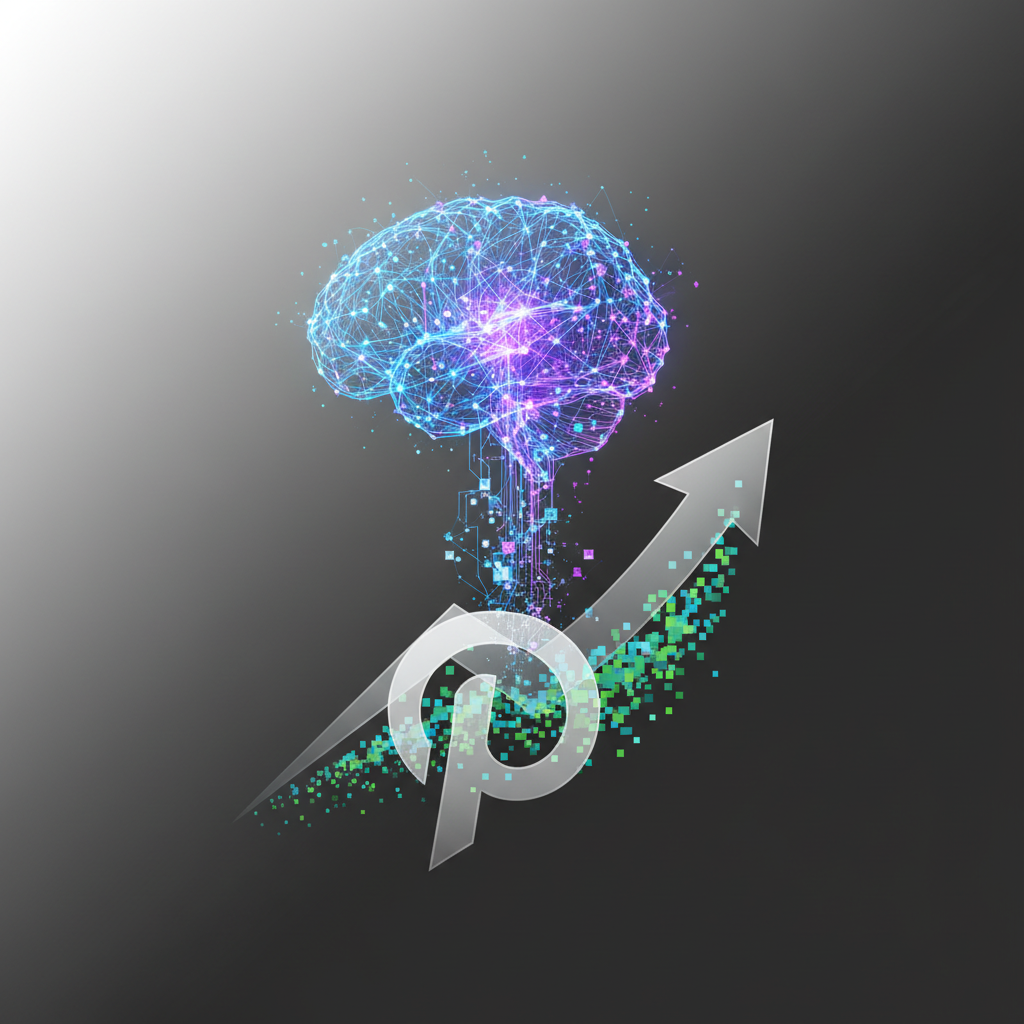
The crux of Elliott's strategy, and indeed their confidence in Pinterest, lies in the power of Pinterest AI. The activist investor is betting that artificial intelligence can provide the critical spark needed for a significant turnaround. Their hypothesis is straightforward yet profound: Pinterest's vast repository of visual data—billions of pins, boards, and user interactions—is an unparalleled asset ripe for AI-driven growth. By deploying advanced AI capabilities, Pinterest can unlock untapped potential within this data, revolutionizing user experience, supercharging its ad business, and ultimately reclaiming its position as a leading force in social media innovation.
Unlocking Potential: The AI Vision for Pinterest's Revival
The vision for Pinterest's revival is deeply intertwined with the transformative capabilities of artificial intelligence. Elliott’s investment isn't merely about cutting costs; it's about investing in a future where AI unlocks exponential growth.
Enhancing User Experience with Personalized AI
At the heart of the Pinterest strategy is a reimagined user experience powered by AI. Imagine advanced recommendation engines that don't just suggest similar pins, but anticipate your next project, style preference, or travel dream based on subtle cues in your visual history. AI-powered visual search improvements could go far beyond current capabilities, allowing users to "shop the look" from any image, identify objects with greater precision, or even find similar aesthetics across different categories. This would mean a truly personalized content feed that adapts in real-time to evolving interests, leading to increased engagement, longer time spent on the platform, and a more delightful discovery journey. This level of personalization is crucial for social media innovation.
Revolutionizing the Ad Business
For Pinterest, AI offers a potent solution to its shrinking ad business. By leveraging AI, the platform can enable precise ad targeting based on an unprecedented understanding of user interests, visual context, and purchasing intent. For instance, if a user consistently pins home decor ideas, AI can infer they are planning a renovation and serve highly relevant ads for furniture, paint, or contractors. New AI tools for advertisers could simplify campaign creation, optimize ad placements for maximum impact, and provide deeper insights into performance. Furthermore, AI-powered e-commerce integration could lead to seamless purchasing experiences, allowing users to buy discovered products directly within the platform with minimal friction, transforming Pinterest into a powerful retail discovery engine. This aligns with trends discussed in AI in E-commerce: Revolutionizing Online Shopping Experiences.
Combating Competition with Innovation
AI provides Pinterest with the tools to differentiate itself in a crowded market. By developing unique AI features, Pinterest can offer experiences not easily replicated by rivals. This could include AI-generated inspiration, where users provide a few keywords and AI creates a mood board or design concept; smart content curation that filters out noise and presents only the most relevant, high-quality pins; or even AI-assisted creation tools for businesses and content creators on the platform. Beyond content, AI can significantly improve platform moderation and user safety, creating a more positive and brand-safe environment, which is a major concern for both users and advertisers across all social platforms.
Data-Driven Decision Making
Finally, AI's analytical capabilities will empower Pinterest with truly data-driven decision-making. By analyzing vast datasets of user behavior, trends, and content performance, AI can provide invaluable insights that inform every aspect of the business. This includes guiding product development towards features users genuinely want, optimizing marketing campaigns for better ROI, and enabling rapid, agile strategic shifts in response to market changes. This analytical prowess is critical for sustained tech investment success.
Navigating the Future: Challenges and the Road Ahead
While the AI vision for Pinterest is compelling, the path to revival is not without its hurdles. Elliott's intervention may provide capital and strategic impetus, but execution remains paramount.
Implementation Hurdles
Integrating advanced AI capabilities across a massive platform like Pinterest presents significant technical complexities. This includes everything from building robust AI infrastructure capable of processing vast amounts of visual data to developing sophisticated algorithms that can deliver on the promise of hyper-personalization and intelligent search. Furthermore, securing top AI talent – data scientists, machine learning engineers, and AI ethicists – is a fiercely competitive endeavor, and Pinterest will need to invest heavily in attracting and retaining these crucial resources. The cost of such an overhaul will be substantial, requiring careful allocation of the new investment.
User Adoption and Perception
Even the most advanced AI features are useless if users don't adopt them or if they perceive them negatively. Pinterest must ensure that new AI enhancements are intuitive, genuinely enhance the user experience, and don't feel intrusive or "creepy." Balancing personalization with user privacy concerns will be a delicate act. Users are increasingly wary of how their data is used, and Pinterest must communicate transparently about its AI implementations while ensuring robust data protection measures are in place to build and maintain trust.
Sustained Competition
The tech landscape is in a constant state of flux, and the pace of innovation is relentless. Even with a renewed focus on AI, Pinterest will need continuous innovation to stay ahead of its rivals. How will established players like Meta (Instagram) and Google (visual search) respond to Pinterest's AI pivot? What about new, AI-first startups that could emerge? Pinterest must not only integrate AI effectively but also maintain an agile product development cycle to anticipate and counter competitive moves, ensuring its unique selling propositions remain strong in the face of evolving trends.
Elliott's Influence and Corporate Governance
Elliott Management's significant stake inevitably brings with it a degree of influence over corporate governance. This could manifest as demands for boardroom changes, strategic shifts, or increased pressure for short-term financial returns. While activist investors can be a catalyst for positive change, balancing these demands with a long-term strategic vision for AI development and platform growth will be crucial. Pinterest's leadership will need to navigate this dynamic carefully, ensuring that the focus remains on sustainable innovation rather than solely on immediate shareholder value.
Conclusion with Call-to-Action
Elliott Management's billion-dollar bet on Pinterest is more than just a financial maneuver; it's a vote of confidence in AI's transformative power. While Pinterest faces a challenging uphill battle, Elliott's involvement signals a strong push towards leveraging artificial intelligence to rediscover growth and reclaim its position in the competitive social media landscape. The coming months will be crucial in determining if AI can indeed provide the innovative spark Pinterest desperately needs, transforming its vast visual data into a vibrant, personalized, and highly monetizable experience.
What do you think? Can AI be the savior Pinterest needs, or is Elliott's bet a high-stakes gamble with uncertain returns? Share your thoughts in the comments below!